Friday, July 3, 2026

The Science of Reading People


The Science of Reading People: Decoding Human Behavior


The core skill is recognizing that non-verbal cues, body language and facial expressions reveal more accurate information about a person's true feelings and intentions than their words alone. This is crucial. 


Non verbal expression, body language, Decoding people's behaviour,


Decoding Non-Verbal Communication


Non-verbal communication constitutes over 60 percent of human communication.

Body language reveals information before verbal communication.

Focus on observing what people do, not just what they say.


How It Works:


Posture shifts:

 Indicate discomfort or changes in emotional state.

Genuine smiles:

 Involve the eyes look for crows feet.

Microexpressions:

 Fleeting less than a second facial expressions that reveal true, often hidden, emotions.

Inconsistencies: 

Look for mismatches between verbal statements and non-verbal behavior e.g., saying Im confident while fidgeting.

Example: 


Think of people as icebergs. What they say is the visible tip only around 10 %. What they do with their body language is the massive, hidden base, representing the 90 % you need to understand the full picture.


Watch Out For:


Focusing solely on words: The biggest trap is believing everything people say at face value.

Isolated Cues: Don't jump to conclusions based on one's gesture. Look for patterns and clusters of behavior.

Cultural differences: Be mindful that body language varies across cultures.


The goal:


The ultimate takeaway is that mastering these skills isn't about gaining control over others; it is about becoming a mirror and a witness to the human experience. By moving from observation to connection, one can navigate relationships and high-stakes situations with clarity, confidence, and compassion.

How to Understand Anyone Instantly 


1. If someone blinks exactly 7 times in under 10 seconds, they've just lied to your face without realizing it.


2. People who tap their foot while smiling are subconsciously angry. That smile isn't for you, it's damage control.


3. If they clean their glasses before responding, they're mentally editing their words to avoid exposing the truth.


4. A person who touches their neck mid-conversation is subconsciously uncomfortable with their own answer.


5. People who inhale deeply through their nose before speaking are about to manipulate your emotions


6. If someone rubs their nose while you tell them something., they think it's a dumb idea.


7. When someone suddenly shifts from crossed legs to an open posture, they've become comfortable with you.


8. If you notice a person that doesn't talk much, but when they do, they nail it. They are highly intelligent people.


9. People who cross their legs immediately after sitting usually have strong ambitions and an active attitude.


10. Those who habitually touch their chin while speaking are generally alert and attentive in their work.


11. If someone appears surprised for more than three seconds, it's definitely fake.


12. If someone mirrors your body language, it's likely the conversation is going well.


13. If a person laughs excessively, even at silly things, they are probably lonely inside.


Wednesday, November 29, 2023

Healing anxiety and overthinking


Healing anxiety and overthinking by  Joseph Nguyen 

An overview 

THE ROOT CAUSE OF ALL SUFFERING

Our feelings stem from our internal thoughts about events, not the events themselves. It highlights the distinction between neutral thoughts and the potentially harmful act of thinking about those thoughts, which can lead to suffering. The key message is that letting go of negative thinking is essential for overcoming emotional suffering. The provided framework of healing anxiety and over thinking suggests acknowledging and creating a space for persistent negative thoughts to promote a healthier mindset.


Healing anxiety and over thinking,The root cause of all sufferings, all sufferings comes from our thoughts, psychology books, free psychology books,root cause of all suffering is negative thoughts.
All suffering comes from negative thoughts. 

 HOW TO LET GO OF NEGATIVE THINKING

This framework for overcoming emotional suffering involves recognizing that thinking is the root cause and creating a space to acknowledge and understand negative thoughts. It emphasizes the importance of questioning whether the thinking serves you and the cost of holding onto it. By trusting and letting go, positive emotions like peace, love, and joy can naturally emerge, leading to a fuller experience of life.


  • Take a deep breaths to center and ground yourself in the present moment.
  •  Remember that if you're suffering, you're thinking.
  • Remember the difference between thinking and thoughts.
  • Thinking is the act of thinking about thoughts.
  • Don't be afraid to be alone with your thinking and have the courage to allow it to be in your consciousness.
  • Once you acknowledge that you are thinking, that it is the root cause of suffering and that you are safe when you let go of it, consciously intend and decide to let it go. Naturally positive emotions will arise, like peace, love, and joy. Allow yourself to enjoy these emotions in its fullness as they come up. 


Sunday, October 24, 2021

Happy chemicals in brain


Updated: 20 Aug 2022


Happy 

chemicals

 in brain 


What are brain chemicals? 

Brain chemicals are actually neurotransmitters that carry signals from one neuron to another.

These chemicals are compound couriers in the body. Their responsibility is to send signals from nerve cells to target cells. These objective cells might be in muscles, organs, or different nerves 


Meet your happy chemicals:

There are Four main chemicals in the brain that influence our happiness. 
All play a role in how you experience happiness.
 

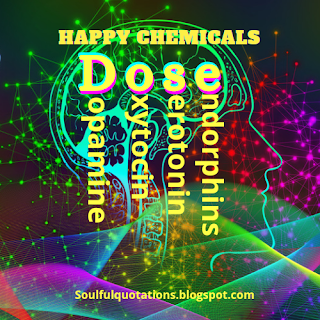
Dose of Happiness 😊

Dopamine

Oxytocin

Serotonin

Endorphins


Happy chemicals in brain, neurotransmitters, happiness chemicals, Happy chtemicals in brain, happiness chemicals,
Happy chemicals in brain 


Dopamine :

Plays a role in how we feel pleasure. It’s a big part of our unique human ability to think and plan. It helps us strive, focus, and find things interesting.


Oxytocin :

Is a hormone and a neurotransmitter that is involved in childbirth and breast-feeding. It is also associated with empathy, trust, sexual activity, and relationship-building. It is sometimes referred to as the “love hormone,” because levels of oxytocin increase during hugging. It allows us to become social creatures.
 

Serotonin :

If you are in good mood you have got serotonin to thank. If you are in bad mood you have got serotonin to blame. It is a regulator. 80 percent of serotonin exist in the gut. And is governed by state of your hunger. 


Interesting fact about serotonin :

Eating spicy food causes your brain to produce 'happy' hormones, like serotonin, which makes you better equipped to deal with depression, anxiety, anger, and stress.

Endorphins :

primarily help one deal with stress and reduce feelings of pain. The pleasure effect associated with endorphins is in part related to the increased dopamine production that occurs due to endorphin activity..   

Together these chemicals create desirable situation. 


Wednesday, August 7, 2019

Emotional wellness


What is Emotional wellness? 

Emotions are a necessary part of one’s  life. When you are attentive to both positive and negative emotions or feelings and able to understand how to handle these emotions. It means you are emotionally healthy  . Emotional wellness also includes the ability to learn and grow from experiences.

“Grow through what you go through.” 

How you are feeling from inside right now? 
If you are clam , content and feeling ok right now and feel ok most of the time . Then you are emotionally healthy. 


Emotional wellness quote, make sure you are fine from the inside too.
Emotional wellness quote

When you are emotionally healthy you generally feel good about yourself. Emotionally healthy people have flexibility , they can adjust in every situation. They acknowledged their emotions. They know how to manage and express themselves when they feel upset .

Emotional wellness inspires :

 self improvement, calmness ,help you out to manage your  stress and the development of inner strength. Allow your self to learn from your mistakes , and learning from your own mistakes is actually the best way to improve your self .
Emotional well-being also encourages proper decision making skills. It is an important part of overall wellness.

Emotional wellness is all about management :


Emotional wellness is not about how many problems you have in your life ,everyone has to face them on and off . It's more about how you approach and manage  the problems in life.

We all face difficulties in our life , but how we respond to these difficulties and problems matter more than that difficulty.
Your reaction to a problem is often a bigger problem than the problem.

It is hard to see the bright side during tough times, it is really challenging but whatever you are going through try to find out the ways that can help you to get rid of hard times.  It can only be possible if you are able to manage your emotions. 

Emotionally healthy people still feel sadness ,anger, stress , but they know how to manage their feelings. 

How to manage emotions? 


If you want to improve and maintain emotional health ,it  takes efforts and ongoing evaluation of your thoughts and feelings.
Ask questions from yourself :
banner image
  • How can I do things better or how can I manage this negative emotion? 
  • How can I learn from this to better my future? 
Improving Emotions  doesn’t happen overnight.
It’s important to be patient with yourself.

Remember what ever emotion you are experiencing is because you chose yourself to feel that way .you are the source of all your emotions. 
Your  thoughts  play  vital role in your emotion forming. So focus on good things .
Emotions can teach you value able lessons.  Be confident  that you can handle this emotion . Be confident that you can face any thing , because every thing happens for a reason and may be this reason can help you out to become a stronger individual.

Thanks for reading!

 Stay blessed 
Source :

https://shcs.ucdavis.edu/wellness/emotional

https://blisshealthcoaching.com/7-ways-to-improve-your-emotional-health/

Friday, July 12, 2019

Psychology facts


Psychology facts :


What you are going to read in this post :
Psychology facts and sayings in urdu .

LIFE’S FACTS :

ماہر نفسیات کہتے ہیں کہ 98  فیصد زندگی کے حقائق انسان کی نظروں سے اوجھل ھوتے ہیں، اور یہ بھی ایک کرم ہے ۔ ۔ 
قاسم علی شاہ~

FATIGUE OF BRAIN AND HEART :


Psychology facts in urdu
Psychology facts in urdu 

ذہن تھک جائے تو مصروفیت 
کم کردیجیے    
 دل تھک جائے تو مصروفیت بڑھا دیجئے ۔ ۔ ۔

ATTITUDE :


Psychology facts about attitude in urdu
Psychology facts in urdu 


  • سب سے خوبصورت اور صاف زبان رویوں کی ہوتی ہے ۔کچھ کہنا سننا بھی نہیں پڑتا .اور ساری بات سمجھ بھی آجاتی ہے۔

  • سخت رویے بات تو منوا دیتے ہیں مگر دلوں میں فاصلے بڑھ جاتے ہیں ،جب رہنا ساتھ ہوں تو دونوں طرف رویوں میں لچک ہونی چاہیے۔ کچھ منوا لیا کچھ مان گئے ،  یہ ہی مثبت رویے رشتوں میں تازگی کو برقرار رکھتے ہیں ۔ جہاں انا ہو وہاں صرف پچھتاوا اور تلخیاں ہوتی ہیں ۔ ۔ ۔
WHAT IS LOVE:

محبت الفاظ نہیں رویہ ہوتی ہے ۔

PEOPLE’S PREDICTIONS :

الفاظ جو بھی ہوں جیسے بھی ہوں ، لوگ مطلب ہمیشہ اپنی مرضی کا نکالتے ہیں ۔

AVOID FREE ADVICERS:

لوگ ہر اس  مسئلے کا حل جانتے ہیں جو ان کا نہ ہو۔

WORST ENEMY :


  • انسان کا سب سے بڑا دشمن اس کا دماغ ہے۔ پکڑ پکڑ کے لاتا ہے ان لمحوں کو جو اذیت دیتے ہیں ۔

  • جتنا زیادہ سوچو گے ، اتنا زیادہ اذیت میں رہو گے،  یا تو اپنے آپ کو مضبوط کرلو، یا مصروف کر لو ۔

SECRET OF HAPPINESS AND IMPROVEMENT :

خوش ہونا ہے تو تعریف سنیے، اور بہترہونا ہے تو تنقید سنیے۔

HOW TO TOUCH HEARTS ?

 دلوں پر لفظ نہیں ۔۔۔۔۔ لہجے اثر کرتے ہیں ۔

HOPE :

Psychology facts about hope in urdu
Psychology fact about hope

لفظ "امید "کے سرکئی زندگیاں بگاڑنے کا الزام بھی ہے اور کئی سنوارنے کا سہرا بھی ۔ ۔ ۔

BE DEAF TO NEGATIVITY :

زندگی میں آگے بڑھنا ہے تو بہرے ہو جاو ، کیوں کہ بعض لوگوں کی باتیں مایوسی میں اضافہ کر دیتی ہیں ۔ ۔ ۔

LEARN TO LISTEN SOUND OF SILENCE :


Psychology facts about broken people in urdu
Body language reveals unspoken truths.

خاموشی کو سمجھنا سیکھو کیونکہ ، ٹوٹے ہوئے لوگ لفظوں کا استعمال نہیں کرتے۔ ۔ ۔

Thanks for reading !

Sunday, June 9, 2019

Psychology of fears


Updated : 5 March 2021


Psychology of fear :


Faith, fear,psychology of fear, we must live by faith not by Fear.
We must live by faith , not by fear.

" Fear is the cheapest room in the house. 
I would like to see you living
In better condition. "
~Hafiz 


Quote image about fear , meaning of fear .
F.E.A.R = Face every thing and rise

Fear is one of the most powerful and primitive  emotion. It has strong effect on your mind and body.
child is born with no fears, except those of falling and loud noises. All other fears child  learn as he or she grows up.

Two major fears :


The two major fears we all develop are the fear of failure or loss and the fear of criticism or rejection . These two fears sometimes destroy our whole life. Specially when you get criticism and rejection from those who are really special for you  , or you did  a lot for them .


Physical and psychological fears :


There are two types of fear. When you do something and feel fear about that particular thing or act you want to do , then you have to know that there are two types of fear physical fear and psychological fear , so you have to plan for physical fear and leave psychological fear . you must know that there is no fear that can't be conquered.

What you’re afraid of and how you act when you’re afraid of something can vary per person. You can learn to feel less fearful and to cope with fear so that it doesn’t stop you from living.


Fear can be divided into two responses:
biochemical and emotional.

 The biochemical response is universal, while the emotional response is highly individual.

What is anxiety? 

Anxiety is a word often used by health professionals when they’re describing persistent fear. 
We use the word anxiety  for some types of fear that are usually to do with the thought of a threat or something going wrong in the future, rather than right now. 

Duration of fear and anxiety :

Fear and anxiety can last for a short time and then pass, but they can also last much longer and you can get stuck with them .

What is phobia? 

A Phobia is an extreme fear of a particular animal, thing, place or situation. People with phobias have an overwhelming need to avoid any contact with the specific cause of the anxiety or fear. 

The thought of coming into contact with the cause of the phobia makes you anxious or panicky.

Fear is a healthy emotion  :

 Fear is an unavoidable fact of the human experience. While fear sounds bad, but it can actually be used as a positive emotion. 
 Fear uses consequences to drive people into action. Like fear of getting fired, serves you as a way to keep you productively moving towards specific goals, or tasks .

Psychology of fear, other side of every fear is Freedom.
Other side of every fear is FREEDOM.

Fear can create strong signals of response when we’re in emergencies ,like if we are caught in a fire or are being attacked , in this situation fear is a natural response to a threat.   If in  this way we see fear (physical fear )  it is actually healthy and helpful. Because through this awareness (fear) you can plan to deal the situation which is causing fear .

All psychological fears, like facing public,  fear of defeat in something,  fear of future, fear of criticism or rejection,  all these types of fears can be conquered through your willpower and confidence.


Fear qoutes, psychology of fears, how to deal fears
Please don't feed the fears. 

Source : https://www.mentalhealth.org.uk/publications/overcome-fear-anxiety